Sound Healing is ancient medicine using sound frequencies and vibrations to bring the body, mind and spirit into balance.
In other words, it is a method of consciously (Need Blog on this Topic – What is Conscious State of Mind) using sound so that body and mind and spirit come into harmony, more balance.
Let’s Imagine: You’re in your car, stuck in traffic, the engine’s running and horns are blowing — it’s annoying.
Now you press play on your favourite music, and in a second or minutes your state of mind will be changes: resistance will fall, gratitude will be increases. They are both sounds, one irritating and the other calming. That is the power of sound.
As the human body contain approximately 70% water, It resonate with vibration and frequency to a certain Level.
It is this fact that sound healers, using sound healing techniques, tap into in order to promote health.
In this article you’ll find out what sound healing is, how it works (from the vibrations to your brainwaves), and what it’s not (music therapy).
You can also get insight into its ancient history & modern applications. This includes everything you need to know about the instruments used. What are the safety guidelines?
We will try and cover some of that but we can’t tell you every little thing so please consult a healthcare professional if uncertain. We will finish up looking at Futuristic Sound Healing.
The Science Behind Sound Healing
Sound is vibration and these vibrations move through air or the matter around us into our ears. But also reflect throughout the tissues, liquids and energy systems of our body.
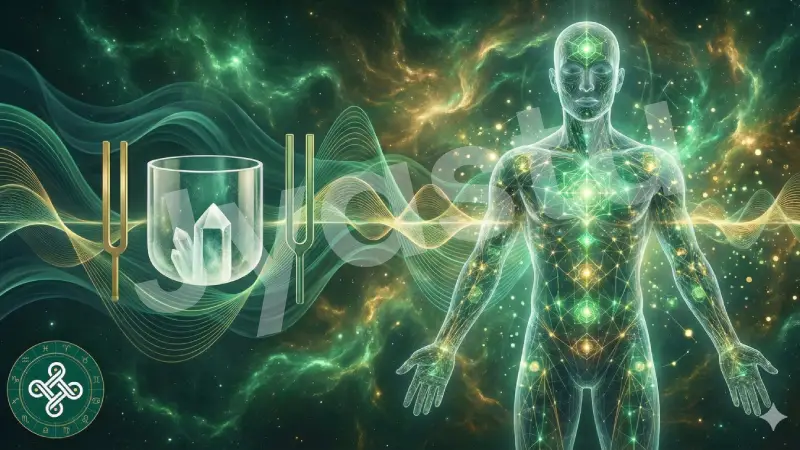
The principal of resonance is if one thing vibrating at the same natural frequency of a second thing, the first will induce vibration in the second.
According to sound therapy, there are multiple resonant points within the body.
Entrainment and Brainwaves:
One is entrainment: When our brainwave patterns align (or “entrain”) with an external rhythmic stimulus, such as a steady tone, drum pattern or sonic bath. This alignment helps the mind transition more easily from one state to another (for example, from alert to relaxed).
Studies have shown that aural can reduce stress markers, improve heart rate variability (HRV) (Need Blog on this Topic – What is variability heart rate) and even enhance mood.
Scientific Studies:
Although sound healing science is still in its early stages, studies have shown promising results. For example, a sound healing intervention delivered virtually significantly reduced anxiety after feasibility testing. Another study found that sound and vibration can modulate systems related to stress perception, both physiological and psychological.
Mind-Body Connection:
Sound does more than hit the ear. It is able to stimulate the autonomic nervous system (which control “rest & digest” vs “fight or flight” responses), as well as the hormonal system (like cortisol – our stress hormones) and also promote balance in the body’s nervous system. (Need Blog on this Topic – How sound effect our Nervous System)
By using sound intentionally, We can shift the body and mind into conditions more conducive to healing, regenerating and resting.
Do Music Therapy and Sound Healing Mean the Same Thing?
Therapists use such structured activities as listening to music, singing and instrument playing to address the emotional, cognitive, social and physical needs of clients.
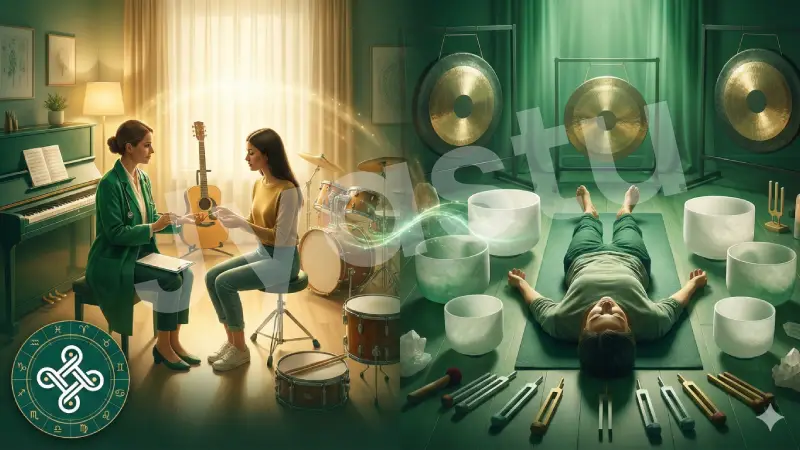
Sound Healing vs Music Therapy:
Sound therapy and Sound healing are differ in intent, method and training. Not all sound healing practices are the same, but these both typically include frequencies and vibrations and resonance to achieve states of relaxation, meditation, energetic balancing.
Music therapy is often more interactive, directive, and grounded in clinical settings.
Both sound therapy and music therapy can reduce stress, support emotional healing and promote relaxation. However, recognizing their differences helps us understand what each approach offers.
Now we can say that, music therapy is not the same thing as sound healing. In music therapy clients frequently engage in an active manner; in sound healing participants quite often receive the sound/vibrations by using tools and frequencies instead of structured musical experiences.
History and Origins of Sound Healing
In ancient Egypt (Need Blog on this Topic – Sound Healing in ancient Egypt), chanting and ritual sound were also used in medicine and divination. In ancient Greece (Need Blog on this Topic – Sound Healing in ancient Greece), the mantle passed from Orpheus to his disciples, mystic followers of Pythagoras who studied the mathematical relationships of strings and believed specific musical intervals could cure mental disorders such as depression.
In India (Need Blog on this Topic – Sound Healing in ancient India), mantra chanting and the use of sound as a tool for healing in systems like Ayurveda are steeped in Vedic tradition.
Tibet and Native American (Need Blog on this Topic – Sound Healing in ancient America), Aboriginal cultures also used the drum, akin to the bowls, bells and chanting for healing and ritual.
Revival in the 20th and 21st centuries Sound healing has seen a revival of interest, particularly in this century as part of the holistic health movement. Modern sound healing was introduced to the West by pioneers such as Jonathan Goldman (Need Blog on this Topic – Who is Jonathan Goldman and his Contribution in Sound Healing).
How Sound Healing Works
At the core of sound healing is also the concept of ripple effects (Need Blog on this Topic – jyastu.com/sound/ripple-effect), pressure waves on the body create vibrations which move through our bodies.
These vibrations may impact cells, tissues, energy fields and the body’s neurology. They help to calm over-aroused systems and assist underactive ones.
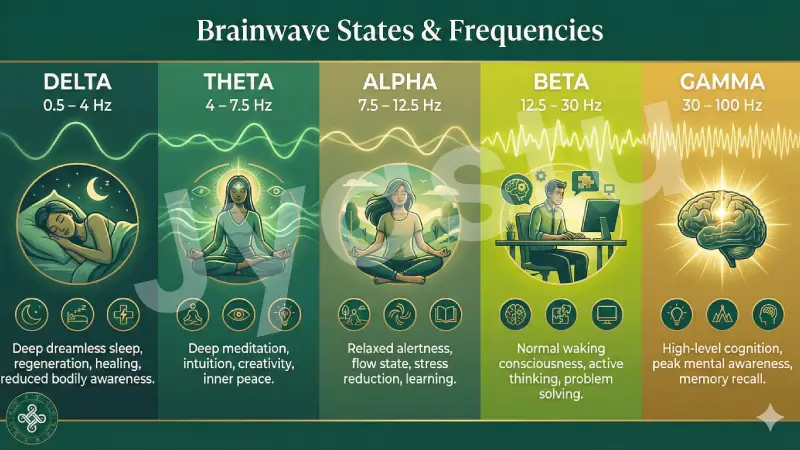
Here are common brainwave bands and how they relate:
| State | Frequency | Primary Characteristics |
|---|---|---|
| Delta | 0.5 – 4 Hz | Deep dreamless sleep, regeneration, healing, reduced bodily awareness |
| Theta | 4 – 7.5 Hz | Deep meditation, intuition, creativity, inner peace |
| Alpha | 7.5 – 12.5 Hz | Relaxed alertness, flow state, stress reduction, learning |
| Beta | 12.5 – 30 Hz | Normal waking consciousness, active thinking, problem solving |
| Gamma | 30 – 100 Hz | High-level cognition, peak mental awareness, memory recall |
Example: One person lying in a sound bath session may receive vibrations that Influence his or her brain out of the Beta or Alpha stage and into Theta, while another might even enter the Delta state, promoting intense relaxation and healing.
Research has found that singing-bowl sound meditation can help to reduce tension, anxiety and depression, as well as promote spiritual well-being.
More than brainwaves, (Need Blog on this Topic – what are brainwaves) sound healing applies into systems theory which views the body as a complex network of frequencies, energies, water, and tissues.
In sound healing, By introducing tones that harmonize and realign the body’s natural frequencies. Much like one tuning fork can cause another to start vibrating if both are tuned to the same pitch (resonance), sound healing helps to bring the body’s “out-of-tune” frequencies back into harmony.
Sound Healing for Overall Well-being
Emotional Healing:
Sound therapy is an effective approach for managing anxiety, stress, post-traumatic stress disorder, depression.
When you are anxious, your nervous system may be stuck in “alert” mode. Sound healing help the body to shift into a calmer state by reducing cortisol and encouraging parasympathetic (rest-and-digest system) activation. (Need Blog on this Topic – what is parasympathetic system and how it helps in release anxiety)
By using specific sound frequencies, sound therapy encourages relaxation and promotes emotional balance, making it a powerful tool for mental wellness.
Physical Healing
Sound Healing can influence our circulatory system, muscle health, sleep patterns, and nervous system. This would be helpful in pain management, immune function and toning down tension in tense muscles.
Research suggests that sound healing can also reduce physiological stress marker. (Need Blog on this Topic – what are stress markers and how sound healing help to reduce them)
Spiritual Healing:
Sound healing is very much associated with meditations, mindfulness and spiritual awakenings. Sound Healing helps to achieve a higher state of consciousness.
Tapping the bowls, the gongs or mantras helps to connect with deeper consciousness, inner peace, and an ability to find energetic harmony.
Holistic Health:
In the perspective of holistic health, the body and mind are seen as interconnected. Sound healing works in all three of these domains:
- Vibration impacts the physical
- Brainwaves and nervous system affect the mind/brain/emotions
- Resonance affects the spiritual and energetic aspects of being
Sound healing helps to balance and harmony in these areas, promoting overall well-being.
Instruments Used in Sound Healing
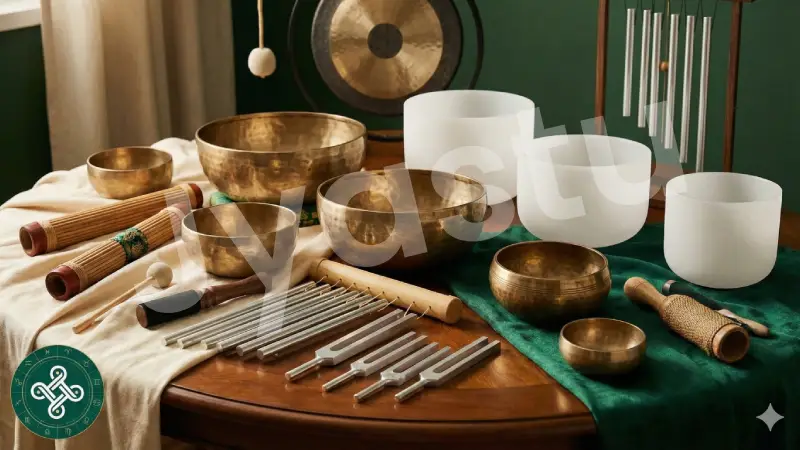
Here’s a selection of tools that sound healers use, and how they are used:
Tuning Forks:
Normally placed on or in close proximity to the body and it creates pure tones that ‘tune’ or balance specific centres of energy.
Singing Bowls (Tibetan or Crystal):
When played with a mallet, they emanate complex harmonic vibrations and elongated tones that “cleanse” the body.
Gongs:
Their deep, complex vibrations can become enveloping for a listener; they are often part of “sound bath” offerings.
Drums:
Chants can induce energy flow, earth connection and ritual/dance in the body.
Chimes & Bells:
Clear and high pitched sounds that assist in ‘clearing’ energy, stimulating awareness (focusing), marking the transitions within sessions.
Voice/Chanting/Mantras:
The human voice is one of the original instruments; toning, chanting, repetition of mantras can have vibrational and energetic effects.
In a session, by playing these instruments the practitioner can vary volume, rhythm, pitch and spatial acoustics to adjust a participant’s mental state from wakefulness, into flow and down to deep rest.
How to Practice Sound Healing
Self-Practice Tips:
- Get started: Lay in a comfortable position, play a singing bowl or tuning fork, close your eyes, breath deeply and let the sound (vibrations) move through your body.
- Use Quality Sound: Wear headphones or use a strong sound-system if you are using recorded frequencies, CDs or apps.
- Experiment with Sound: Try humming, toning (such as “om” or “ahh”), and see how your body vibrates.
- Enhance with Other Practices: Pair sound pattern with breathwork, mindfulness or gentle yoga for maximum benefits.
Professional Sessions:
A sound healing session might have you lying on a mat or sitting as the practitioner plays instruments around, and sometimes even on, your body — essentially giving you what’s called a “sound bath.” (Need Blog on this Topic – What is sound bath url → sound healing / techniques/ sound bath)
The practitioner may inquire about how you are feeling, supply some blankets or pillows and lead you in a relaxation or meditation.
The sessions can range from 30 minutes to 90 minutes, and be group-based or one-on-one.
Integration:
- Sound healing also pairs well with yoga, meditation, Reiki, breath work, massage or other holistic treatments.
- Listen to recorded sound-healing tracks at home every day for short periods (10-20 minutes) to get benefits from sound vibrations.
Benefits of Sound Healing
Mental Benefits:
Sound healing can help to:
- Reduce stress
- Less anxiety
- More relaxing
- Clearer mind
- Make better ability to focus
Emotional Release: Sometimes during a session something that you are feeling (and maybe not expressing) will come forward and release either through the vibration or to trans-personal state.
Physical Benefits:
Physical benefits of sound healing includes:
- Deeper sleep
- Muscle tension relief
- Improved circulation
- Assistance in reducing the nervous system
Research suggests that low-frequency vibrations from sound healing are helpful in wound healing and tissue repair.
Spiritual Benefits:
- Self-awareness
- Connection to one’s inner life
- Peace and purpose
By combining sound healing with meditation, you can enter a mindful state where the “monkey mind” quiets, allowing for greater intuition and inner peace.
Holistic Impact:
It can help to balance and align body-mind-spirit at the same time. Regular practice could help you feel more grounded, centred, resilient and aligned.
Real-world results: In one study of singing bowl meditation, participants experienced significant decreases in tension and anxiety as well as increases in spiritual wellbeing.
Safe Practices and Guidelines for Sound (Energy) Healing
General Safety Tips:
Opt for an expert and experienced practitioner particularly for real time chat.

Make sure the place is comfortable, you won’t be interrupted and you can stop if it gets uncomfortable.
Precautions:
If you have hearing problems, epilepsy, pacemakers/medical devices or pregnant please consult your doctor or qualified practitioner before using intense sound/vibration sessions.
Uncomfortable sound vibrations: Loud volumes, especially low frequencies like vibration from bass tones in music or a speaker can cause you discomfort, dizziness and overstimulation—Use sound moderation.
Chill and let the healings integrate after a session (and – to point out the obvious don’t go running if you’ve just had a healing).
Personal Comfort:
Always listen to your body. If a sound or vibration doesn’t feel right, and is “off-putting” for you rather than soothing – tell the practitioner.
After intense workouts, make sure you drink water and get plenty of rest; the way you would after deep meditation or a massage.
The Future of Sound Healing
Sound healing is even edging its way out of the fringes and into wellness centres, spas, and in some cases hospital-affiliated programs. For instance, one university has recently introduced sound bath sessions to its students.
Scientific Research:
As the evidence base expands, so will acceptance for more clinical indications. Work on brainwaves, neuro-modulation, vibration therapy and biofield interaction is ongoing.
Technological Tools:
We’re seeing frequency-specific apps, sound bowls integrated into chairs, vibroacoustic devices, digital platforms for distant sound healing. Sound healing could also soon merge with wearables, biofeedback and virtual reality.
Integration with Modern Medicine:
Although no substitute for medical therapies, sound healing could serve as an adjunct in the treatment of pain conditions, sleep disturbances, stress reduction and mental health. With more RCTs trickling in, the healthcare sector may start to do even more vibration-based stuff.
Conclusion
There’s a beautiful intersection when it comes to sound healing where ancient knowledge meets modern science. Over time, a variety of approaches have aimed to leverage what we mean by that word onomatopoeia itself: the movement and regulation of air molecules. From this simple idea, that sound is also vibration, has emerged an approach to healing that leans on resonances from brainwave states and physiology in general. Sound healing — through singing bowls, tuning forks, gongs or the voice — can help facilitate emotional release and physical relaxation as well as spiritual connection.
If you’re curious, begin lightly, — play a bowl, lie down, take deep breaths and let the vibration flow through you. Or next, attend a qualified sound healing session. As time goes by you may find that something as straightforward as sound might be what it takes to feel balanced, calm and clear again.
Take it a little deeper, if you are led to, and don’t forget: Your own experience is the best guide.
Author’s Note / Expert Quote:
“Sound is not simply listened to; it is experienced through the body. In the vibration of this, we align to our own natural rhythm.”
— From Jyastu, Your Guide in Healing Journey